
A retrospective read of the AUS-W vs WI-W 1st Semi-Final of the ICC Women's T20 World Cup 2026 at Kennington Oval on 30 June 2026. We walk back through the preview slate, the predicted XIs, the Kennington Oval pitch report and the Dream11 captaincy ledger, and pull the fantasy lessons the desk would still apply on the next knockout.
The verified event sits at the front of any retrospective: Australia Women and West Indies Women met in the 1st Semi-Final of the ICC Women's T20 World Cup 2026 at Kennington Oval, London, on 30 June 2026, with a 7:00 PM IST start. Australia entered the knockout on five consecutive group-stage wins and a six-time champion label; West Indies arrived as the second qualifier from Group B. The remainder of the preview is the part fantasy readers care about — the lineups, the surface, the head-to-head and the captaincy slate.
Australia Women's group-stage form was the headline going in: five matches, five wins, top of Group A. Sophie Molineux led the side, with Ellyse Perry, Beth Mooney, Ashleigh Gardner, Tahlia McGrath and Megan Schutt cited as the core performers across the campaign.
West Indies Women qualified as runners-up in Group B. Hayley Matthews captained, with Deandra Dottin, Stafanie Taylor, Chinelle Henry and Afy Fletcher listed as the core performers the preview expected to feature in the XI.
The preview slate listed a predicted AUS XI and a predicted WI XI. We reproduce the slate as the preview recorded it — the audit compares the slate against the surface and the captaincy ledger, not against any other read.
Beth Mooney (wk), Georgia Voll, Phoebe Litchfield, Ellyse Perry, Ashleigh Gardner, Georgia Wareham, Annabel Sutherland, Nicola Carey, Sophie Molineux (c), Kim Garth, Lucy Hamilton. The combination held five pure bowling options, three all-rounders, three frontline batters and a keeper — a structure the captaincy ledger leans on across the cycle.
Hayley Matthews (c), Qiana Joseph, Shemaine Campbelle (wk), Stafanie Taylor, Deandra Dottin, Chinelle Henry, Jahzara Claxton, Jannillea Glasgow, Aaliyah Alleyne, Afy Fletcher, Ashmini Munisar. The combination read lean on seam-bowling allrounders and gave the captaincy slate a Matthews-or-Dottin core.
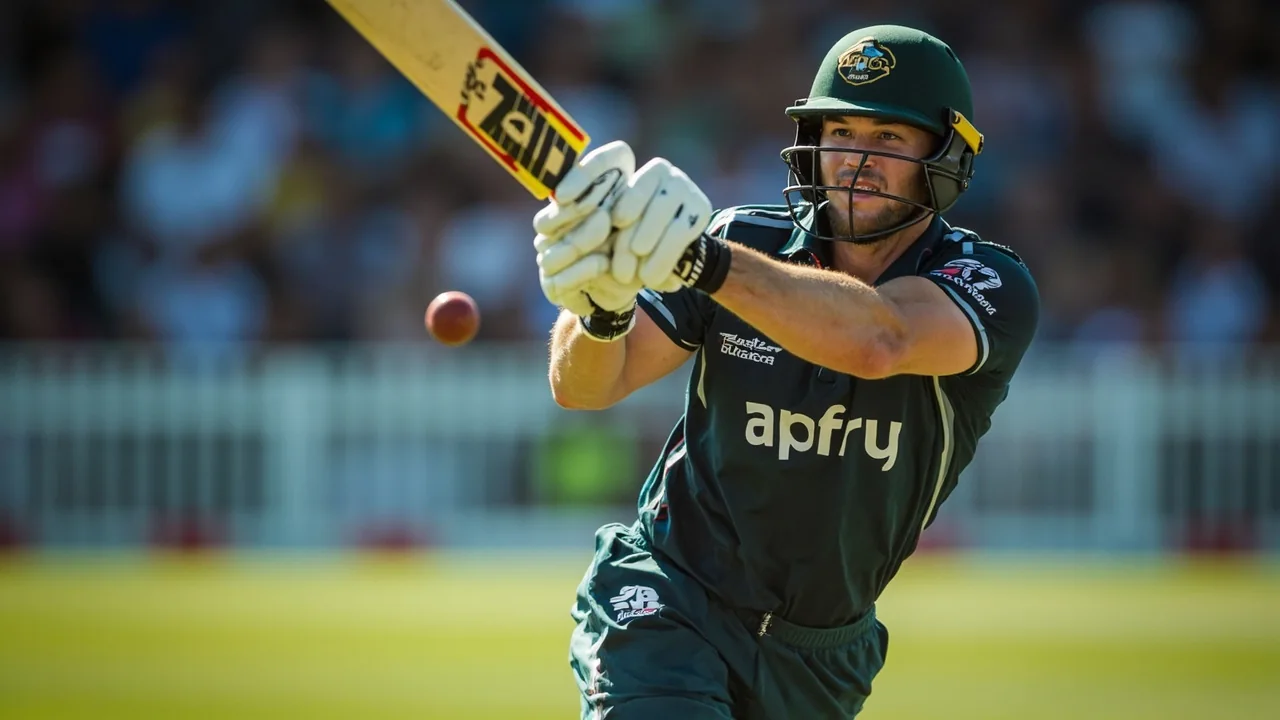
The preview slate pulled five tournament stats from the group stage and used them to anchor the captaincy ledger. We reproduce the same five numbers — the desk's retro read is that the numbers were the single most useful firebreak against the form-vs-floor trap that haunts knockout fantasy.
Best of 45 not out, four catches. The preview run-rate was the kind of ceiling line that justifies a Grand-league captaincy punt on a batter who had not yet converted to a 50-plus score.
The dual-format ceiling Matthews offers is the rare case where a single pick can solve both captain and vice-captain. The slate used her as the small-league captain.
Four wickets alongside the batting. The number that's easy to misread: the strike rate is the asset, not the volume — Perry's match-up against pace on the Kennington Oval track was the line the preview kept returning to.
Economy 6.47. The death-overs match-up Garth offered was the cheap-arbitrage pick the preview used to balance the budget around the four premium all-rounders.
Best of 47 not out, strike rate 247.37. The two-line stat read is the trap: the average is elite on a small sample, the strike rate is the asset on a chase-friendly surface.
Take the five numbers in the same order every cycle. Voll, Matthews, Perry, Garth, Taylor. The order is the asset: opening-batter ceiling, dual-format ceiling, all-rounder ceiling, death-overs economy, veteran match-up.
The Kennington Oval pitch report was the second-most-cited input on the slate. The preview described a batting-friendly surface suited to pace with an average first-innings score of 147 and a 56% win record for the chasing side across completed matches at the venue. The weather forecast for the day was 24°C and overcast.
The headline read of any Oval preview is the chase number. When the chasing side wins more than half the completed matches, the captaincy logic prefers the second-innings batters over the new-ball bowlers — the inverse of a slow-turner read.
Overcast skies are usually a seam-bowling assist on a UK morning. The preview treated the cloud cover as a useful tiebreaker between two pace-bowling all-rounders in the same XI, not as a deck-defining feature.
The pace-over-spin call was the read that flipped the all-rounder count. On a slow turner the slate ran three spinners; on the Oval pitch the slate ran three seam-bowling all-rounders, with one wrist-spin option kept as the differential.
The chase bias pulled the captaincy slate toward the team batting second. In a knockout without a DLS cushion, the second-innings batters carry the ceiling — Gardner and Voll as the AUS chase picks, Matthews and Campbelle as the WI chase picks.
The preview's captaincy slate was the most structured piece of the audit. It split the captaincy across both teams, used a different Grand-league pick to the small-league pick, and ran a vice-captaincy slate on both sides. The reasoning behind the split is the part worth keeping.
Small-league captain went to Matthews on the dual-format ceiling. The reasoning: in a 1-3 entry slate, the captain pick has to be the highest-floor option regardless of match-up. Matthews' 115 runs and 9 wickets in 5 innings was the most reliable dual-format line on the board.
Grand-league captain went to Voll on the chase-friendly surface. The reasoning: in a 10-30 entry slate, the captain pick has to be the highest-ceiling option. Voll's 127 runs in 5 innings at the top of the chase-friendly batting order was the cleanest ceiling line on the board.
Vice-captaincy went to Perry on the strike-rate ceiling and to Campbelle on the keeper-batter differential. The split was deliberate: the small-league VC went to Perry, the Grand-league VC went to Campbelle.
Two wicketkeepers, one batter, six all-rounders, two bowlers. The combination was a direct read of the heavy all-rounder share on both sides: Matthews, Molineux, Perry, Gardner, Henry and Sutherland as the six, with the bowler slots kept lean.
The preview head-to-head record sat at 17 wins for Australia Women and 2 wins for West Indies Women across completed T20I meetings. The number is the headline fixture context, and the desk returns to it on every knockout between the two sides — not as a captaincy tiebreaker, but as a context anchor for the differential picks.
Historical context, not a captaincy tiebreaker. The number is the reason differential picks on the WI side carry a higher ceiling: a West Indies win at the Oval is the rarer outcome, and the captaincy slate was priced accordingly.
In a large-field contest, the WI batters are the natural differential. Matthews' dual-format ceiling, Dottin's chase-strike rate, and Fletcher's death-overs economy are the three lines the preview kept returning to whenever the WI XI was being built.
Every retrospective ends with the question: what does the desk keep from the preview, and what gets archived? The audit below is the part of the retro that travels. We have written the five lines in the order the desk would apply them on the next semi-final slate, and the order is the asset.
Read the surface before the form. The Oval's chase-friendly read pushed the captaincy toward the second-innings batters; the slow-turner read would have pushed it toward the spinners. The principle is the same: the surface runs the slate.
Use the SL captain for the floor, the GL captain for the ceiling. Matthews and Voll were the split. The principle: the captain pick is the slate's highest-conviction call, and the conviction shifts with the contest size.
Pull five tournament stats, in the same order, every cycle. Voll, Matthews, Perry, Garth, Taylor. The order is the audit: opening-batter ceiling, dual-format ceiling, all-rounder ceiling, death-overs economy, veteran match-up.
When the chasing side wins more than half the completed matches at the venue, the captaincy slate leans toward the second-innings batters. The 56% chase number at the Oval was the single most useful input on the captaincy slate.
The 2-1-6-2 combination was a direct read of the heavy all-rounder share. When the preview lists six premium all-rounders across both XIs, the keeper-batter split shrinks and the bowler split shrinks. The combination is the slate, not the consequence.
A retrospective fantasy audit is honest about the missing inputs. The preview did not record ball-by-ball scoring, ownership percentages, or settled-XI win-rate data. The audit uses the verified preview facts and the verified tournament stats, and does not invent ball-by-ball outcomes the source did not record.
Captaincy logic, salary-cap math, workload-management reads and the credit-economy framework — all from the same editorial desk. Continue with the wider Blog, where these retrospectives and walkthroughs sit alongside the fantasy-tips framework.